
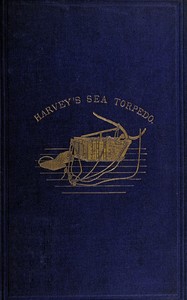
Instructions for the Management of Harvey's Sea Torpedo by Frederick Harvey
I picked up this slim volume expecting a dusty technical pamphlet. What I found was a surprisingly gripping and unsettling piece of history. Frederick Harvey's book is exactly what the title says: a step-by-step guide for operating his patented maritime defense weapon. But reading it feels like holding a piece of live ordnance in your hands.
The Story
There's no traditional plot with characters. The 'story' is the weapon itself. Harvey walks the reader—presumably a Royal Navy officer or harbor master—through the entire life cycle of his 'torpedo.' He explains how to carefully transport the explosive keg, how to attach its trigger mechanism (a delicate and dangerous operation), how to anchor it underwater in a defensive field, and finally, how to connect it to an electrical firing station on shore. The climax of the 'narrative' is the moment the operator, watching from land, decides to complete the circuit and detonate the charge against an enemy vessel. The book ends with instructions for safely disarming and recovering the units. It's a cold, clinical blueprint for controlled chaos.
Why You Should Read It
This book fascinated me because of its stark contrast. The language is polite, methodical, and reassuring. Harvey constantly emphasizes safety and precision. But the subject matter is pure, calculated violence. It makes you think deeply about the human relationship with technology, especially technology of war. We often see the grand results—the battles, the sunken ships—but we rarely see the quiet, meticulous work that makes it possible. This manual shows that work. It highlights the strange normalcy that surrounds tools of destruction. The operators weren't faceless soldiers in battle; they were technicians following a checklist, probably worrying about the weather or if they'd tightened a bolt correctly. That mundane reality is more profound than any battle description.
Final Verdict
This isn't a book for everyone. If you need a fast-paced novel, look elsewhere. But if you're a history nerd, especially interested in military tech, naval history, or the Victorian era, this is a hidden gem. It's also perfect for anyone who likes primary sources that make you stop and think. You can read it in an hour, but you'll be turning it over in your mind for days. It's a quiet, powerful reminder of how instruction manuals can sometimes tell the most human stories of all.
This book is widely considered to be in the public domain. You are welcome to share this with anyone.
Paul Thompson
11 months agoAfter a thorough walkthrough of the table of contents, the author doesn't just scratch the surface but goes into meaningful detail. This is a solid reference for both beginners and experts.
Barbara Wilson
1 year agoI've been looking for a reliable source on this topic, and the level of detail in the second half of the book is truly impressive. Top-tier content that deserves more recognition.
Elizabeth Garcia
2 weeks agoImpressive quality for a digital edition.
Robert Moore
2 years agoA brilliant read that I finished in one sitting.










William Johnson
2 months agoHaving explored several resources on this, I find that the historical context mentioned in the early chapters is quite enlightening. A rare gem in a sea of mediocre content.