
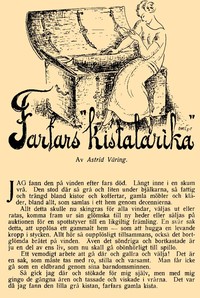
Farfars "kistalarika" by Astrid Väring
Astrid Väring's 'Farfars "kistalarika"' is a quiet, reflective novel told through objects. The story follows a young woman who, after her grandfather's passing, is tasked with clearing out his home. The central piece of furniture is his beloved 'kistalarika'—a tall chest of drawers. Instead of seeing it as a chore, she approaches it with curiosity, treating each drawer as a chapter of his life.
The Story
There's no dramatic plot twist or high-stakes conflict here. The narrative unfolds as the narrator opens each drawer, one by one. The top drawer holds documents and letters, hinting at a youthful romance and career hopes that took unexpected turns. Another is filled with mementos from his travels—a seashell, a foreign coin, a map folded a thousand times. A lower drawer contains simpler things: a worn-out pipe, a set of woodworking tools, a child's drawing signed by the narrator herself. Through these fragments, a portrait emerges. We see a man who was sometimes lonely, often thoughtful, deeply attached to his family, and who found joy in small, specific things. The story is her process of meeting the man behind the title 'Grandfather,' piecing together his private joys and sorrows from what he chose to keep.
Why You Should Read It
This book is a masterclass in showing, not telling. Väring doesn't give us long explanations about the grandfather's character. Instead, she lets the objects do the talking. A dried flower tells us about a lasting love. A half-finished carving suggests patience interrupted. It makes you realize how much of a person's inner world is held in the things they can't bear to throw away. Reading it feels intimate, like you're sitting on the floor beside the narrator, dusting off memories. The prose is simple and clear, but it carries a real emotional weight. It’s less about a specific time in Swedish history (though the early 20th-century setting is gently felt) and more about the universal experience of trying to know someone after they're gone.
Final Verdict
This is a perfect book for a thoughtful afternoon. If you enjoy character-driven stories, family histories, or slice-of-life fiction, you'll find a lot to love here. It's also a great pick for anyone who appreciates books that find the extraordinary in the ordinary—fans of authors like Tove Jansson or the quieter moments in Willa Cather's work might feel right at home. It’s not a fast-paced thriller; it's a gentle, poignant exploration of memory and legacy. By the end, you'll probably look at that old box or jam-packed drawer in your own house and wonder what story it's waiting to tell.
This text is dedicated to the public domain. Preserving history for future generations.
Paul Davis
3 months agoI started reading this with a critical mind, the step-by-step breakdown of the methodology is extremely helpful for students. If you want to master this topic, start right here.
Richard Davis
8 months agoI was particularly interested in the case studies mentioned here, the critical analysis of current industry standards is very timely. Finally, a source that prioritizes accuracy over hype.
James Williams
10 months agoOne of the most comprehensive guides I've read this year.
Linda Martin
1 year agoRight from the opening paragraph, the way it challenges the status quo is both daring and well-supported. I feel much more confident in my knowledge after finishing this.