
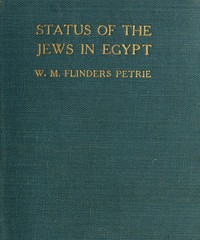
The Status of the Jews in Egypt by W. M. Flinders Petrie
So, what's this book actually about? Don't worry, it's not a dry history lecture. Flinders Petrie was a famous archaeologist, and in the early 1900s, his team dug up a bunch of broken pottery pieces with writing on them at an Egyptian military fort. These weren't royal decrees. They were everyday notes, letters, and receipts written by Jewish people living there. We're talking about messages like 'Please send my cloak' or 'I paid the rent for the house.' Petrie translates these fragments and uses them to paint a picture of a community.
The Story
There isn't a traditional plot with characters. The 'story' is the puzzle Petrie is trying to solve. The common historical view was that Jews in Egypt at this time were either powerless captives or a poor, struggling minority. But the letters tell a different tale. Petrie walks us through evidence of Jews owning homes and vineyards, serving as archers and guards for the Pharaoh, and engaging in business. He argues that they were integrated, respected residents with legal rights, not oppressed slaves. The book is his case, built piece by piece from these ancient texts, challenging the bigger narrative we think we know.
Why You Should Read It
I loved this because it turns history into a personal, ground-level experience. You're not reading about empires clashing; you're reading about a soldier asking his friend for a favor. It makes that distant world feel real and messy. Petrie's excitement is contagious—you can feel him connecting the dots, getting surprised by what he finds. It’s a powerful reminder that history is often written by the winners or from a single perspective, and sometimes the truth is in the mundane details, like a rent receipt.
Final Verdict
This is a perfect pick for anyone who loves a good historical mystery or enjoys seeing how archaeology can rewrite the story. It's short, focused, and surprisingly accessible for a century-old academic work. If you're a fan of books that explore the gap between 'official' history and lived experience, you'll get a kick out of this. It's not a light novel, but it's a compelling, evidence-based argument you can read in an afternoon. Just be ready to have your assumptions about ancient Jewish life seriously questioned.
This digital edition is based on a public domain text. Share knowledge freely with the world.
Melissa Flores
10 months agoAs someone who reads a lot, the pacing is just right, keeping you engaged. Exactly what I needed.




Robert Hernandez
4 months agoI was skeptical about the depth of this book at first, but the concise summaries at the end of each section are a lifesaver. It’s a comprehensive resource that doesn't feel bloated.