1

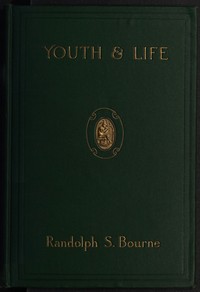
Youth and Life — Background and Themes
(0 User reviews)
2901
Project Gutenberg
2022
Not confirmed
American essays -- 20th century
Readers of public-domain and historical texts
Project Gutenberg digital edition
en
Edition facts
Words
74,758
Reading time
326 min
Text sections
18
Youth and Life — Background and Themes can be approached with a clearer sense of reading commitment from its source measurements: 74,758 words, 5 hr 26 min estimated reading time, and 18 detected text sections.
The text analysis averages about 24.2 words per sentence, while the detected sections provide another way to judge how the source is divided.
Project Gutenberg metadata also associates the work with “American essays -- 20th century,” connecting these edition facts with the source record’s subject description.
Source:
Project Gutenberg record #67628
Randolph S. Bourne's 1913 essay collection uses vivid metaphors and a conversational yet philosophical voice to explore youth as a period of intense energy, contradiction, and self-expression, examining how social pressures and personal temperament shape one's approach to life.
Editorial Edition Score
4.8/5
★★★★★
★★★★★
Calculated from edition completeness, EPUB availability, text structure and catalogue metadata. Not a user rating.
How this score is calculated
- Description quality20 pts
- Title & short description10 pts
- Source metadata20 pts
- Text length15 pts
- Chapters / structure15 pts
- EPUB file integrity20 pts
Total of 100 points, scaled to a 2.5-5.0 range. Editions with an empty description or a missing EPUB file are not scored.
Edition quality
Public-domain source text
Read the source text
The source text is kept in the dedicated reader, separate from this catalogue record and its commentary.
Randolph S. Bourne opens his 1913 collection Youth and Life with a striking metaphor: youth is a 'great, rich rush and flood of energy,' a sudden bursting of a dam after the slow accumulation of childhood. This image sets the tone for a work that treats youth not as a mere chronological stage but as a distinct mode of consciousness—a 'poignant consciousness of being alive' that drives toward self-expression. Bourne’s prose is both analytical and lyrical, weaving together psychological observation and philosophical reflection. He is careful to note that youth is not inherently radical; it can be 'the most conservative of all ages' when its spiritual force is spent early or its world is narrow. The essays that follow examine this paradox through themes of friendship, irony, religion, and the experimental life, always grounding abstract ideas in concrete, often personal, examples.
The Energy of Contradiction
Bourne’s first essay, 'Youth,' establishes a central tension: youth is a time of 'fiercest radicalisms' and 'most dogged conservatisms,' of 'irrepressible gayety' and 'bitter melancholy.' He does not resolve this contradiction but presents it as essential to the 'showery springtime of life.' The energy of youth, he argues, is chaotic, like a baby kicking in response to a 'great, blooming, buzzing confusion.' This simile, borrowed from William James, signals Bourne’s debt to pragmatist psychology. He insists that the width and depth of the world a young person enters determines whether they become radical or conservative. The essay’s structure mirrors its subject: it moves between assertion and qualification, building a portrait of youth as a dynamic, unpredictable force.
The Social Self and the Adventure of Life
In later essays, Bourne develops a social conception of the self. He writes that 'we can know ourselves best by knowing others,' and that our lives are 'bound up with our friends and teachers and heroes.' This interdependence is not a weakness but a source of nourishment. He urges an 'active' rather than 'passive' interest in the social world, calling for mutual stimulation and inspiration. The 'adventure of life' lies in facing perils and satisfactions with curiosity and bravery. Bourne’s diction here is imperative and exhortatory: 'Let us give back in return as good an influence,' 'Let us live so as to stimulate others.' This rhetorical shift from description to prescription marks a key authorial choice, blending analysis with a call to action.
The Limits of Systems: Religion and Knowledge
Bourne’s essay 'Some Thoughts on Religion' introduces a note of epistemological humility. He describes the youthful confidence that learning will gradually illuminate the entire world, only to confront a moment when 'our carefully ordered world began to dissipate and loose ends and fringes to appear.' The phrase 'ever not quite' captures the elusiveness of complete understanding. Bourne’s imagery of 'strong-boxes for our spiritual goods'—materialism, dogma—suggests a skepticism toward any single system. This section reveals Bourne’s philosophical voice: he is less interested in providing answers than in tracing the process of questioning. The essay’s structure, moving from certainty to doubt, mirrors the intellectual journey he describes.
Voice and Structure: The Essayist’s Craft
Bourne’s authorial choices are evident in his consistent use of first-person plural ('we,' 'our'), which creates a sense of shared experience between writer and reader. He frequently poses rhetorical questions—'How shall I describe Youth?'—and then answers them with vivid analogies. His sentences are often long and periodic, building momentum before arriving at a key point. The collection’s structure, moving from general reflections on youth to specific topics like friendship, irony, and religion, allows Bourne to circle back to core themes from different angles. The tone is earnest but not preachy, philosophical but grounded in everyday observation. These stylistic choices give the essays a conversational intimacy while maintaining intellectual rigor.
Readers approaching Youth and Life will find a work that rewards attention to its language and structure. Bourne’s metaphors—the dam breaking, the strong-box of dogma—are not decorative but central to his argument. His use of 'we' invites the reader into a shared inquiry rather than a lecture. The essays are best read as a sequence, each building on the previous one, though individual chapters can stand alone. Pay particular attention to how Bourne balances description and prescription: he is as interested in how youth is as in how it should be. This tension gives the book its enduring vitality.
I often think of Youth and Life—that eager, restless voice—next to War Taxation: Some Comments and Letters — Edition Insights, for both whisper of the same ache: how the world’s demands chafe against a young conviction that things could be fairer. They speak across years, a quiet kinship of paper and ink, patient on my shelf.
There are no reviews for this eBook.
There are no comments for this eBook.
Reader reflection
How will you remember this book?
Save your reaction, strongest insight, and memorable passage.
Your progress
0
/
10
2
What was your overall reaction to the book?
3
Would you recommend this book to another reader?
4
Did the language feel accessible?
5
Did you gain anything practical from the text?
6
Did any part of the book feel personally relevant?
7
Which aspect of the book did you value most?
8
Did the book deliver what you hoped for?
9
Which lesson or insight stayed with you?
10