1

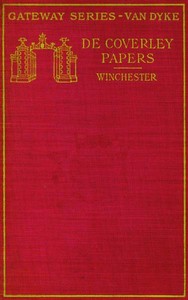
The Sir Roger de Coverley Papers — Story, Setting & Ideas
(0 User reviews)
1463
Project Gutenberg
2015
Not confirmed
English essays
Readers of public-domain and historical texts
Project Gutenberg digital edition
en
Edition facts
Words
74,597
Reading time
325 min
Text sections
43
This digital edition of The Sir Roger de Coverley Papers — Story, Setting & Ideas is described by source-level measurements including 74,597 words, 5 hr 25 min estimated reading time, and 43 detected text sections.
The text analysis averages about 21.2 words per sentence, while the detected sections provide another way to judge how the source is divided.
Project Gutenberg metadata also associates the work with “English essays,” connecting these edition facts with the source record’s subject description.
Source:
Project Gutenberg record #48026
This editorial note examines the authorial choices in Addison, Steele, and Budgell's Sir Roger de Coverley Papers, focusing on diction, dialogue, and description as seen in excerpts from the Spectator papers.
Editorial Edition Score
4.8/5
★★★★★
★★★★★
Calculated from edition completeness, EPUB availability, text structure and catalogue metadata. Not a user rating.
How this score is calculated
- Description quality20 pts
- Title & short description10 pts
- Source metadata20 pts
- Text length15 pts
- Chapters / structure15 pts
- EPUB file integrity20 pts
Total of 100 points, scaled to a 2.5-5.0 range. Editions with an empty description or a missing EPUB file are not scored.
Edition quality
Public-domain source text
Read the source text
The source text is kept in the dedicated reader, separate from this catalogue record and its commentary.
The Sir Roger de Coverley Papers, drawn from the Spectator essays by Joseph Addison, Richard Steele, and Eustace Budgell, present a distinctive blend of character portraiture and social commentary. The authors employ a conversational yet polished diction that mirrors the polite discourse of early 18th-century London coffeehouses. Sir Roger himself is rendered through anecdotal dialogue and descriptive asides that reveal his eccentricities without descending into caricature. The excerpts show a careful balance between narrative economy and moral reflection, with each paper typically centering on a single incident or observation that illuminates broader social or political themes.
Diction and the Polite Style
The language of these papers is deliberately urbane, avoiding both vulgarity and pedantry. Addison and his co-authors favor Latinate constructions and balanced clauses, as in the phrase “a dreadful spirit of division as rends a government into two distinct people.” This formal yet accessible register suits the Spectator's aim to instruct while pleasing. The authors often employ rhetorical devices such as antithesis and parallelism to sharpen their points. For instance, the contrast between “Roundheads and Cavaliers” in Sir Roger's schoolboy anecdote is not merely historical but serves to illustrate enduring partisan folly. The diction consistently maintains a tone of measured reasonableness, even when discussing heated topics like party strife.
Dialogue as Character Revelation
Sir Roger's voice is established through direct speech that is both idiosyncratic and revealing. In the anecdote about finding St. Anne's Lane, his reported dialogue shows a man who learns from social friction: after being called “a young popish cur” and “a prick-eared cur,” he devises an “ingenious artifice” to avoid offense. The dialogue is not merely decorative; it drives the narrative and exposes the knight's pragmatic wisdom. Elsewhere, the emotional climax of the Florio and Leonilla story is conveyed through “dumb show” and tears, where words fail. This reliance on gesture and reported emotion suggests a deliberate authorial choice to let action and silence carry meaning when language proves inadequate.
Descriptive Economy and Moral Framing
The descriptions in these papers are spare but purposeful. Rather than elaborate settings, the authors provide just enough detail to situate the moral argument. In the Whigs and Tories paper, the description of party spirit is abstract yet vivid: it “fills a nation with spleen and rancour, and extinguishes all the seeds of good-nature.” The physical world is evoked through generic references—lanes, country neighborhoods, the game—that serve as backdrops for human behavior. This descriptive restraint focuses attention on the authors' ethical concerns. The closing reflections, often introduced by phrases like “Sir Roger generally closes this narrative with reflections,” explicitly tie the anecdote to a broader moral lesson, a structural choice that reinforces the didactic purpose of the series.
Structural Patterns in the Excerpts
The excerpts reveal a consistent three-part structure: an anecdote or observation, a generalization, and a moral aphorism. In the Sir Roger anecdote, the narrative of the lane-finding is followed by the knight's own reflections on party mischief, then by the author's extended commentary on division. This pattern allows the authors to move from the particular to the universal without abrupt shifts. The use of classical quotations, such as Virgil's “Ne pueri, ne tanta animis assuescite bella,” anchors the moral in ancient authority. The papers also employ a framing device: Sir Roger's voice is often introduced by “my worthy friend” or similar phrases, creating a sense of intimate reportage. These structural choices give the essays a conversational yet authoritative rhythm, blending entertainment with instruction.
Readers approaching these papers should attend to the interplay between the fictional persona of Sir Roger and the essayists' own voices. The knight's simplicity often serves as a foil for more sophisticated commentary, while the authors' polished prose provides a counterpoint to his rustic directness. Noting how dialogue, description, and structure work together will deepen appreciation of the Spectator's craft. The excerpts offer a window into early 18th-century literary taste, where moral instruction and social observation are woven into an elegant, engaging fabric.
That rainy afternoon, the Sir Roger de Coverley Papers felt less like criticism and more like watching someone mend a fence—patient, exact, fond of the wood’s grain. I kept thinking about that quiet fondness, and before I knew it, my hand had reached for something softer, wider: Adventures and Enthusiasms — Background and Themes. It sat on the shelf, unopened for years, and somehow matched the rain perfectly.
There are no reviews for this eBook.
There are no comments for this eBook.
Reader reflection
How will you remember this book?
Save your reaction, strongest insight, and memorable passage.
Your progress
0
/
10
2
How much did you enjoy the reading experience?
3
Is this a title you would suggest to others?
4
How easy was the book to follow?
5
Would you like to discuss this book with someone?
6
What was its emotional impact?
7
What did you think about the pace?
8
Did anything about the book feel genuinely new?
9
What is the main idea you are taking away?
10