1

Hints to Pilgrims — Reading Notes
(0 User reviews)
1746
Project Gutenberg
2011
Not confirmed
Essays
Readers of public-domain and historical texts
Project Gutenberg digital edition
en
Edition facts
Words
48,484
Reading time
211 min
Text sections
4
The catalog record for Hints to Pilgrims — Reading Notes provides practical reading context through 48,484 words, 3 hr 31 min estimated reading time, and 4 detected text sections.
The text analysis averages about 14.9 words per sentence, while the detected sections provide another way to judge how the source is divided.
Project Gutenberg metadata also associates the work with “Essays,” connecting these edition facts with the source record’s subject description.
Source:
Project Gutenberg record #37105
Brooks's essays shift from leisurely, antiquarian openings to playful literary experiments, as when he imagines Carmen in Barchester. His voice blends whimsy with precise observation, and the pace varies from meditative to brisk, often within a single piece.
Editorial Edition Score
4.6/5
★★★★★
★★★★★
Calculated from edition completeness, EPUB availability, text structure and catalogue metadata. Not a user rating.
How this score is calculated
- Description quality20 pts
- Title & short description10 pts
- Source metadata20 pts
- Text length15 pts
- Chapters / structure15 pts
- EPUB file integrity20 pts
Total of 100 points, scaled to a 2.5-5.0 range. Editions with an empty description or a missing EPUB file are not scored.
Edition quality
Read the Text
Nor was this the end. As it still lacked an hour of midnight the general sanitarium declared a Roman holiday. The slight fellow, on a challenge, did a hand-stand, with his feet waving against the wall, while his knife and keys and money dropped from his pockets. The pretty patient read aloud some verses of her own upon the spring. She brought down her water-colors, and laying a charcoal portrait off the piano, she ranged her lovely wares upon the top. The fattest of my friends, also, eager to do his part, stretched himself, heels and head, between two chairs. But, when another chair was tossed on his unsupported middle, he fell with a boom upon the carpet. Then the old doctor brought out wine and Bohemian glasses with long stems and, as the clock struck twelve, the company pledged one another's health, with hopes for a reunion. They lighted their candles on the landing, and so to bed.
I know a man, also, who once met a sword-swallower at a county fair. A volunteer was needed for his trick--someone to hold the scarlet cushion with its dangerous knives--and zealous friends pushed him from his seat and toward the stage. Afterwards he met the Caucasian Beauties and, despite his timidity, they dined together with great merriment.
Then there is a kind of humorous philosophy to be desired on an excursion. It smokes a contented pipe to the tune of every rivulet. It rests a peaceful stomach on the rail of every bridge, and it observes the floating leaves, like golden caravels upon the stream. It interprets a trivial event. It is both serious and absurd. It sits on a fence to moralize on the life of cows and flings in Plato on the soul. It plays catch and toss with life and death and the world beyond. And it sees significance in common things. A farmer's cart is a tumbril of the Revolution. A crowing rooster is Chanticleer. It is the very cock that proclaimed to Hamlet that the dawn was nigh. When a cloud rises up, such a philosopher discourses of the flood. He counts up the forty rainy days and names the present rascals to be drowned--profiteers in food, plumbers and all laundrymen.
A stable lantern, swinging in the dark, rouses up a race of giants--
I think it was some such fantastic quality of thought that Horace Walpole had in mind when he commended the Three Princes of Serendip. Their Highnesses, it seems, "were always making discoveries, by accident and sagacity, of things which they were not in quest of: for instance," he writes, "one of them discovered that a mule blind of the right eye had traveled the same road lately, because the grass was eaten on the left side." At first, I confess, this employment seems a waste of time. Sherlock Holmes did better when he pronounced, on finding a neglected whisp of beard, that Doctor Watson's shaving mirror had been shifted to an opposite window. But doubtless the Princes put their deduction to higher use, and met the countryside and village with shrewd and vivid observation.
Don Quixote had this same quality, but with more than a touch of madness. Did he not build up the Lady Tolosa out of a common creature at an inn? He sought knighthood at the hands of its stupid keeper and watched his armor all night by the foolish moon. He tilted against a windmill. I cannot wholeheartedly commend the Don, but, for an afternoon, certainly, I would prefer his company between town and town to that of any man who carries his clanking factory on his back.
But, also, I wish a companion of my travels to be for the first time in England, in order that I may have a fresh audience for my superior knowledge. In the cathedral towns I wish to wave an instructive finger in crypt and aisle. Here is a bit of early glass. Here is a wall that was plastered against the plague when the Black Prince was still alive. I shall gossip of scholars in cord and gown, working at their rubric in sunny cloisters. Or if I choose to talk of kings and forgotten battles, I wish a companion ignorant but eager for my boasting.
The opening essay of Hints to Pilgrims establishes a deliberate, almost ceremonial pace. Brooks describes medieval pilgrims receiving advice from neighbors—boots tapped, hose darned, maps scrawled on the hearth—in sentences that accumulate detail like a painter layering color. The voice is genial and slightly archaic, fond of phrases like “honey syllabub” and “greasy pockets.” Yet this unhurried manner is not uniform. In “On Finding a Plot,” the prose quickens into a comic, almost theatrical rhythm as a young author locks himself in his room with De Maupassant. Brooks shifts between a narrator’s calm exposition and the imagined scene of a bishop distracted by Carmen’s scarlet stocking, a change in pace that mirrors the essay’s subject: the collision of literary worlds.
The Pilgrim’s Pace: From Ceremony to Comedy
The title essay moves with the stately tread of a procession. Brooks enumerates the pilgrim’s preparations—boots, hose, wallet, garter—in a series of parallel clauses that mimic the ritual itself. The tone is affectionate but detached, as if observing a pageant. By contrast, “On Finding a Plot” opens with a young author’s desperate vow, a scene rendered in brisk, colloquial prose: “He did put an apple and sandwich prudently at the back of his desk.” The shift is not merely tonal; it signals a different kind of attention. Where the first essay dwells on objects and customs, the second darts into hypotheticals—Carmen in Barchester, Pollyanna in Crime and Punishment. Brooks uses the change in pace to explore how narrative voice can be bent to different purposes: one essay savors the past, the other toys with the present.
Voice as a Tool: The Narrator’s Shifting Persona
Brooks’s narrator is not a fixed character. In “Hints to Pilgrims,” he speaks as a collector of lore, using “we” and “our” to include the reader in a shared historical imagination. The sentences are long, with multiple clauses linked by commas and dashes: “Then a honey syllabub was drunk in clinking cups, and they made a night of it.” In “On Finding a Plot,” the narrator becomes a confidant, reporting the young author’s thoughts in free indirect style: “Perhaps, he considered, if his own invention lagged…” The voice is more intimate, even conspiratorial. Brooks also inserts himself as a fallible commentator: “Alas! In my forgetfulness I have skimmed upon the actual plot.” This self-correction is a deliberate narrative device, a pause that changes the rhythm and reminds the reader that the essay is a constructed performance.
Structural Play: The Essay as Literary Game
Brooks’s essays often adopt a structure that mirrors their content. “On Finding a Plot” begins with a problem (the author’s block) and then enacts a series of literary mashups, each introduced by “Suppose.” The structure is cumulative and playful, like a kaleidoscope turning. The pace accelerates as each hypothetical is sketched more quickly: Carmen, then Mark Tapley, then Pollyanna. Brooks even interrupts himself to acknowledge that he has “skimmed upon the actual plot,” a metafictional gesture that slows the momentum and adds a layer of self-awareness. In contrast, “Hints to Pilgrims” follows a linear, chronological arc from preparation to departure. The structure is circular, ending with the sun climbing “the exultant noon.” These structural choices are not arbitrary; they are part of Brooks’s argument about how narrative can be shaped by voice and pace.
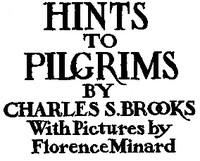
Brooks’s essays reward attention to their seams—the points where voice shifts, pace quickens, or structure breaks its own pattern. Readers may find it useful to compare the opening and closing of individual pieces, noting how the narrator’s stance changes. The illustrations by Florence Minard, though not discussed here, likely complement this tonal variety. Treat each essay as an independent experiment in tone and tempo, not as a chapter in a unified argument.
That rain fell for hours, and Bresnahan’s essays wandered from cathedral crypts to Carmen’s improbable Barchester visit, each page turning like a slow afternoon thought. Afterwards, I reached for something quieter, and found Nuts and Nutcrackers — A Reader’s Guide had been sitting on the same shelf all along, its neat, practical margins a gentle counterweight to his playful digressions.
There are no reviews for this eBook.
There are no comments for this eBook.
Reader reflection
What did you think of this book?
Answer a few questions and save a private reflection on this device.
Your progress
0
/
10
2
How much did you enjoy the reading experience?
3
Would you pass this book on to a friend?
4
How easy was the book to follow?
5
Which aspect of the book did you value most?
6
How understandable was the text?
7
Did the story or argument move comfortably?
8
Is this a title worth rereading?
9
Which lesson or insight stayed with you?
10