1

Journeys to Bagdad — Reading Notes
(0 User reviews)
2663
Project Gutenberg
2006
Not confirmed
Essays
Readers of public-domain and historical texts
Project Gutenberg digital edition
en
Edition facts
Words
26,751
Reading time
117 min
Text sections
3
Before opening Journeys to Bagdad — Reading Notes, the edition data offers a quick orientation: 26,751 words, 1 hr 57 min estimated reading time, and 3 detected text sections.
The text analysis averages about 21.1 words per sentence, while the detected sections provide another way to judge how the source is divided.
Project Gutenberg metadata also associates the work with “Essays,” connecting these edition facts with the source record’s subject description.
Source:
Project Gutenberg record #20095
Charles S. Brooks's essay collection uses whimsical yet precise observations—from a ship chandlery's hemp-and-tar smell to a hurdy-gurdy's effect on laundry—to explore the urge to escape routine. The opening, middle, and later excerpts reveal a playful, digressive voice that builds meaning through sensory details and literary allusions.
Editorial Edition Score
4.6/5
★★★★★
★★★★★
Calculated from edition completeness, EPUB availability, text structure and catalogue metadata. Not a user rating.
How this score is calculated
- Description quality20 pts
- Title & short description10 pts
- Source metadata20 pts
- Text length15 pts
- Chapters / structure15 pts
- EPUB file integrity20 pts
Total of 100 points, scaled to a 2.5-5.0 range. Editions with an empty description or a missing EPUB file are not scored.
Edition quality
Public-domain source text
Read the source text
The source text is kept in the dedicated reader, separate from this catalogue record and its commentary.
Brooks begins by addressing readers directly, asking if they belong to "that elect" who feel stirrings to abandon work and wander. He names specific stimuli: the smell of hemp and tar from a ship chandlery, described with concrete details—"great cordages," "hooks, swivels, blocks and tackles"—that evoke adventure. The prose is conversational yet crafted, mixing colloquial asides with literary references like Treasure Island. This opening establishes a pattern: Brooks uses sensory triggers to launch into meditative digressions, inviting readers to follow his associative logic.
The Elect and Their Stirrings
Brooks frames his essay as a personal manifesto for those who feel a periodic urge to escape. He lists stimuli that provoke this wanderlust, beginning with the ship chandlery's smell. The description is layered: first the exterior filth and "ancient whiffs," then the interior where rope dominates, then the sail loft with "bronzed fellows, rheumatic, all with pipes." Each detail builds a vivid scene. Brooks's voice is self-aware—he calls his nose "ridiculous" for finer matters—and he uses hyperbole playfully, as when he imagines the chandlery as "Treasure Island itself, shuffled and laid apart in bits." This section establishes the book's method: precise observation as a springboard for fancy.
Circuses, Elephants, and Peanuts
Later in the opening essay, Brooks turns to circuses and hurdy-gurdies. He describes elephants eating peanuts with mock astonishment: "Why this behemoth with the swishing trunk, should eat peanuts, contemptible peanuts, lies so deep in nature that the mind turns dizzy." The humor arises from incongruity—the mighty beast reduced to a penny's worth of food. Brooks also recounts a trick with a heated penny thrown to an organ grinder, and a memory of renting a hurdy-gurdy for a dollar. These anecdotes are not mere nostalgia; they illustrate how small, sensory events can trigger larger reflections. The writing is rhythmic, with short clauses and sudden shifts in tone, from philosophical to farcical.
Laundry Dancing to the Polka
In a striking passage, Brooks observes a Monday washing line: Mrs. Y's "gaunt replica" and her husband's "woolen semblance" dancing to a hurdy-gurdy. He quotes Shakespeare—"Neither of them is shap'd for sportive tricks"—then imagines them moving "heel and toe together, one, two, and a one, two, three." The scene is absurd yet tender, blending literary allusion with everyday life. Brooks contrasts those who despise hurdy-gurdy music with those who feel its call. He dismisses the detractors curtly: "God pity such! I'll not write a word of them." This section shows how Brooks uses humor and empathy to defend simple pleasures against pretension.
Noon as the Best Hour
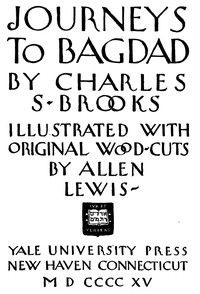
Brooks declares noon the best time of a spring day, "I thrust this in the teeth of those who prefer the dawn." He offers no elaborate argument, only a confident assertion. This moment typifies his style: opinionated but playful, willing to contradict convention. The excerpts end before the essay concludes, but the pattern is clear—Brooks builds a case for the value of whimsy and sensory awareness. His voice is that of a companionable guide, not a lecturer. Readers should expect digressions, sudden shifts, and a tone that is both erudite and folksy. The woodcuts by Allen Lewis, mentioned in the front matter, likely complement this visual, tactile approach.
Brooks's essays reward readers who enjoy following a nimble mind through associative leaps. The excerpts show a writer who trusts small details—a smell, a tune, a line of laundry—to carry larger meaning. His humor is dry, his references wide-ranging but never pedantic. Approach this book as a series of conversations rather than arguments; let the digressions lead where they will. The woodcuts by Allen Lewis add a visual dimension that echoes the text's tactile, sensory focus.
It’s funny how a smell—hemp and tar, say—can pull you out of your own head, isn’t it? Brooks caught that so well in Journeys to Bagdad. I carried that feeling around for days. It reminds me of the quiet, wandering tone in Hints to Pilgrims — Reading Notes, like a shared secret about staying put while dreaming of elsewhere.
There are no reviews for this eBook.
There are no comments for this eBook.
Reader reflection
Before you leave, reflect on the book
Use these questions to collect your thoughts before moving on.
Your progress
0
/
10
2
How did the book work for you overall?
3
Would you recommend this book to another reader?
4
How easy was the book to follow?
5
Could you see yourself revisiting this book?
6
What did you think about the pace?
7
Did this book create an emotional response?
8
Would you like to discuss this book with someone?
9
What is the main idea you are taking away?
10