1

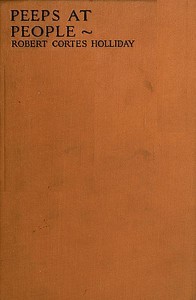
Peeps at People — Themes and Context
(0 User reviews)
805
Project Gutenberg
2011
Not confirmed
Essays
Readers of public-domain and historical texts
Project Gutenberg digital edition
en
Edition facts
Words
19,435
Reading time
85 min
Text sections
3
Peeps at People — Themes and Context can be approached with a clearer sense of reading commitment from its source measurements: 19,435 words, 1 hr 25 min estimated reading time, and 3 detected text sections.
The text analysis averages about 16.2 words per sentence, while the detected sections provide another way to judge how the source is divided.
Project Gutenberg metadata also associates the work with “Essays,” connecting these edition facts with the source record’s subject description.
Source:
Project Gutenberg record #35675
This editorial note examines Robert Cortes Holliday's authorial choices in diction, dialogue, and description across a series of character sketches originally published in the New York Evening Post, focusing on how his conversational tone and precise observations create vivid, psychologically nuanced portraits.
Editorial Edition Score
4.5/5
★★★★★
★★★★★
Calculated from edition completeness, EPUB availability, text structure and catalogue metadata. Not a user rating.
How this score is calculated
- Description quality20 pts
- Title & short description10 pts
- Source metadata20 pts
- Text length15 pts
- Chapters / structure15 pts
- EPUB file integrity20 pts
Total of 100 points, scaled to a 2.5-5.0 range. Editions with an empty description or a missing EPUB file are not scored.
Edition quality
Read the Text
There was a man at that club when this story was told who remarked: "It is said (is it not?) that Swift, re-reading 'Gulliver' many years after it was written, exclaimed: 'My God, what a genius I had at that time!'"
And another man there at the time reminded us of the place somewhere in the books of George Moore where it is observed that "anybody can have talent at twenty, the thing is to have talent at fifty."
He is a tailor. His shop is down at the corner. When trousers are left with him to be pressed and to have suspender buttons sewed on he is always obligingly willing to promise them by the morrow; or if you are in somewhat of a hurry he will promise that the job shall be done this very night. He is the politest and most obliging of men. He will send those trousers up by a boy directly. He is such a cheerful man.
After the time for those trousers to appear has long gone by and no boy has arrived, it is possible that you may work yourself into a passion. You clap your hat upon your head, storm out of the house, and stride toward that tailor shop. You become a little cooled by the evening air, and you begin to wonder if you have not been a trifle hasty. Perhaps you yourself made some mistake concerning your address; things very similar have happened before now, when you have laid the blame upon another and eventually realized that the fault was your own. It would never do to place yourself in such a position with this tailor--a comparative stranger to you. So you will not become abusive to him until you discover who is in the wrong.
But if the fault is his, mind you, he shall learn your character; you are not a man to be trifled with. This fellow can have no sense of business, or anything else, you think. This shall be the last work he will ever get from you. Such a man should not have a business. You will speak to your friends about this; it will run him out of the neighborhood.
You have been walking rapidly and are tolerably heated again. You arrive at the shop expecting to find the tailor on the defensive, with some inane excuse prepared. But you have resolved that it won't go down. You are considerably surprised, therefore, to discover the tailor seated, comfortably reading a newspaper, by a genial fire. He glances up at you as you open the door. His face is without expression at first. Then he recollects you, and your business flashes upon him. He smiles good-naturedly, then bursts into a hearty laugh. Well, of all things, if he hasn't forgotten all about those trousers until this very minute! It's such a joke, apparently, such a ridiculous situation. He so enters into the spirit of the thing and enjoys it so that you have not the heart to rebuke him. You even begin to appreciate the circumstance yourself.
It is so warm in the tailor-shop and the tailor is so jolly you become almost jovial. The tailor promises to send those trousers around the first thing in the morning. He would promise to have them ready for you in ten minutes if you so desired. Upon leaving, you are tempted to invite the tailor out to have a cigar with you. He is so droll, such a felicitous chap, such a funny dog, that forgetful tailor.
In the morning those trousers have not shown up. You pass the tailor shop on your way downtown. The tailor is standing in his doorway, smoking a cigar and looking altogether very bright and cheerful. When he sees you his face becomes still brighter; he apparently becomes brighter all over, in fact; and his eyes twinkle merrily. "Well! well!" he laughs, and slaps his thighs. He is the most forgetful man. He hardly knows what will become of him.
TALK AT THE POST OFFICE
The attention of a little group within the dusk of the post office and general store was, apparently, still colored by an event which mutilated posters on a dilapidated wagon-shed wall, visible through the doorway in the hot light outside, had advertised. A "Wild Bill" show had lately moved through this part of the world. A large, loosely-constructed, earnest-looking man was speaking to several others, seriously, taking his time, allowing his words time to sink well in as he proceeded.
Robert Cortes Holliday's Peeps at People opens with a preface that immediately establishes the author's self-deprecating, anecdotal voice: a man brings a collection of his pieces to a publisher, and the narrator learns of it 'not long ago at a club.' This framing device sets the tone for the sketches that follow—intimate, conversational, and keenly observant of human quirks. Holliday's prose moves with the rhythm of spoken language, often punctuated by dashes and asides that mimic the digressions of a raconteur. The collection, originally published in the Saturday Magazine of the New York Evening Post, gathers twenty-eight brief portraits that range from office boys to a twelve-year-old girl with a taste for macabre fiction. Holliday's authorial choices in diction, dialogue, and description reveal a writer who prizes specificity over generalization, using small, telling details to build character.
The Conversational Frame
Holliday's preface is a masterclass in establishing a conversational frame. He writes in the first person, but immediately distances himself from the narrator: 'I knew a man who used to do some writing... (I know all of this because it was told to me not long ago at a club.)' This layered narration creates a sense of intimacy while allowing Holliday to comment on his own work without direct self-praise. The diction is deliberately informal—'little what-you-call-'ems' for the sketches, 'a very fair press' for the book's reception. Such phrasing positions the author as a modest observer rather than a literary figure. The dedication 'to two fine men' (Eugene F. Saxton and Christopher Morley) further personalizes the volume, hinting at a network of literary friendships. Throughout the sketches, Holliday maintains this tone, often addressing the reader directly with 'we' or 'you,' as in 'We are much interested in the picturesque character of Caroline.' This rhetorical choice blurs the line between essay and conversation, inviting the reader into a shared act of observation.
Dialogue as Character Revelation
Holliday uses dialogue not merely to advance a sketch but to reveal character through speech patterns and word choice. In 'A Nice Taste in Murders,' the twelve-year-old Caroline declares, 'Oh, you ought to read the "Pit and the Pendulum"' and describes it as 'Fine!' Her enthusiastic, unselfconscious language—'They take a man and torture him. It's fine'—contrasts with the narrator's more measured responses. Caroline's phrase 'because he tried so hard' is singled out by Holliday as 'a deep moral observation,' showing how a child's simple words can carry unexpected weight. Similarly, in 'Ida's Amazing Surprise,' Ida's silence and her repeated question about soup are rendered through indirect dialogue: 'she asks, with that same amazingly unsophisticated, interested look, if each of us will have soup.' The absence of direct quotation here emphasizes her inscrutability. Holliday's ear for the rhythms of speech—whether Caroline's breathless summaries or Ida's hesitant queries—turns dialogue into a tool for psychological portraiture.
Descriptive Precision and the Telling Detail
Holliday's descriptions are economical but vivid, often focusing on a single physical trait or gesture that encapsulates a personality. Caroline is 'like a buxom, rosy apple' and wears a 'Peter Thompson' dress—details that suggest health, youth, and a certain tomboyishness. Ida is described through her eyes: 'she pauses, slightly bends forward, her lips a trifle parted, and fastens her clear, utterly innocent, curious eyes upon me.' The specificity of 'lips a trifle parted' and 'utterly innocent, curious eyes' creates a visual image that conveys her childlike wonder. In the preface, the narrator notes that the writer 'had lost more than a little of his buoyancy. The spark had waned; in fact, it was not there.' This abstract statement is grounded by the preceding details of the man's appearance and manner. Holliday avoids generic praise; instead, he selects concrete, often homely images—a flute played in an 'upper chamber,' a 'buxom, rosy apple'—that linger in the reader's mind. These choices reflect a belief that character is best revealed through small, observable phenomena.
Structure and the Art of the Sketch
The collection's structure—twenty-eight short pieces, each with a title that often reads like a caption ('The Forgetful Tailor,' 'Talk at the Post Office,' 'A Human Cash Register')—mirrors the episodic nature of the original newspaper publication. Holliday does not attempt a unified narrative; instead, each sketch stands alone, a 'peep' at a single person or type. The preface acknowledges this, calling them 'little what-you-call-'ems.' Within each sketch, Holliday often begins with a general observation before narrowing to a specific anecdote. In 'A Nice Taste in Murders,' he opens with 'We are much interested in the picturesque character of Caroline,' then moves to her reading habits and a specific night when she played the flute. This pattern—from general to particular—gives the sketches a natural, almost essayistic flow. The closing sketch, 'A Friend, Indeed,' presumably ends the collection on a note of human connection, though the excerpts do not include it. Holliday's structural choices prioritize variety and immediacy over development, reflecting the sketch form's origins in periodical writing.
Holliday's Peeps at People rewards readers who attend to the small details of diction and gesture. The sketches are best approached not as unified stories but as a gallery of miniatures, each capturing a single facet of human nature. Pay attention to how Holliday uses indirect discourse and physical description to imply inner lives; his restraint often says more than explicit commentary. The collection's brevity—around 19,000 words—makes it ideal for dipping into, but the cumulative effect of these 'peeps' is a subtle, affectionate portrait of early twentieth-century American character.
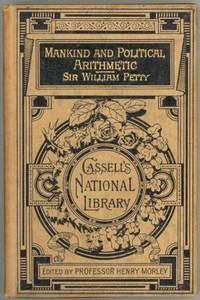
Reading Holliday’s sketches, I kept noticing how gently he lets people reveal themselves through small, unguarded moments—a pause, a misplaced word. It reminded me of the quiet arithmetic in Essays on Mankind and Political Arithmetic — A Closer Reading, where human nature feels measured not judged. There’s a shared patience there, a fondness for the tiny sums that make us who we are.
There are no reviews for this eBook.
There are no comments for this eBook.
Reader reflection
How did this book work for you?
Your answers remain private and are stored only in this browser.
Your progress
0
/
10
2
What was your overall reaction to the book?
3
How likely are you to recommend this book?
4
How easy was the book to follow?
5
How valuable was this book for your own interests?
6
How distinctive were its ideas or approach?
7
Did this book create an emotional response?
8
Did the book deliver what you hoped for?
9
In one sentence, what did you learn?
10